Fertilizing with urine: is it safe?
PATHOGENS
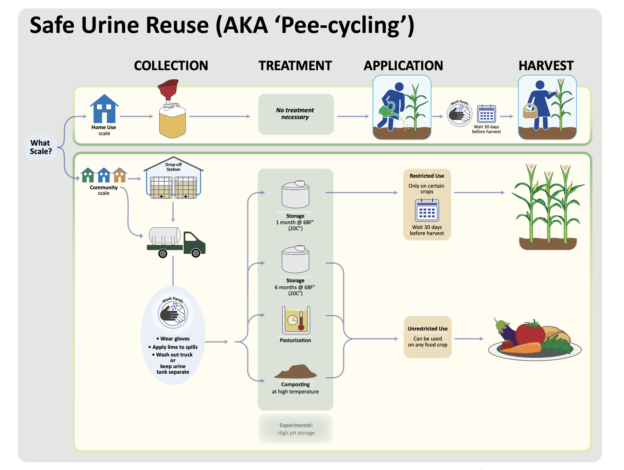
Urine is typically very low in pathogens, though not truly sterile. The primary pathogen risk in working with diverted urine is from fecal cross-contamination. For home-scale urine fertilization, World Health Organization guidelines clarify that treatment is not necessary prior to application, though certain handling and use guidelines are recommended, as detailed in our Guide to Urine Fertilizer in Home Gardens. Beyond the scale of a single home, it is important to implement a pathogen management strategy. The following are two commonly used treatment methods:
Storage: The simplest treatment method available today for pathogen reduction is storage in a sealed container at 68°F or higher for one to six months, depending on what kind of crop the fertilizer will be used for. This allows time for pathogens to be destroyed by the high pH and high ammonia levels found in stored urine. This method is recommended by the United Nations World Health Organization, but is not recognized by the EPA as a standard method for treatment. After applying for special permission from the VT DEC, we have received short-term permits (now expired) to use this method for treating urine for fertilizing hay.
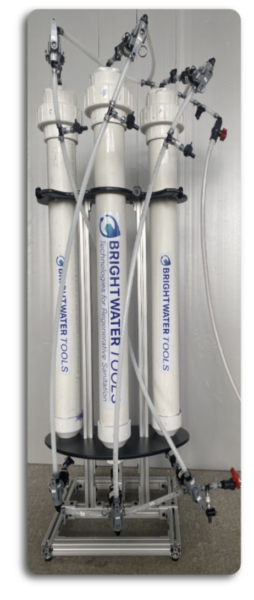
Pasteurization: Pasteurization kills pathogens with heat. The primary advantages of pasteurization over long-term storage are speed, ability to operate in cool weather, and official recognition by the US EPA and state environmental departments as an approved method for destroying pathogens in human waste. This is the method the Rich Earth Institute currently uses for treating all of our urine under a long-term permit from VT DEC. Rich Earth Institute’s spin-off company, Brightwater Tools, sells a urine pasteurizer that heats urine to over 176°F degrees and meets the EPA 40 CFR part 503 standards for the use or disposal of sewage sludge.
HEAVY METALS
Heavy metals are low to non-detectable in urine; amounts are much lower than some other common fertilizers, such as commercial phosphate fertilizers, manure, and biosolids.
PHARMACEUTICALS
Urine can contain pharmaceutical residues. When we flush urine into wastewater treatment systems, many of these chemical compounds are not removed by the treatment process and accumulate in downstream water bodies, with disruptive effects on the species who live there. By diverting urine from the wastewater stream, we can protect these sensitive aquatic ecosystems and water supplies.
When urine is applied to the soil as a fertilizer, our own research and a number of other studies have found that pharmaceuticals do not accumulate in crop tissues at significant levels. A Rich Earth study of urine-fertilized carrots and lettuce found extremely small levels—in the nanogram per gram (or parts per billion) range—of pharmaceuticals in plant tissue. The study tested a broad range of pharmaceuticals with molecular sizes likely to be taken up by plants, including antibiotics, over-the-counter anti-inflammatories, and other drugs commonly found in wastewater.
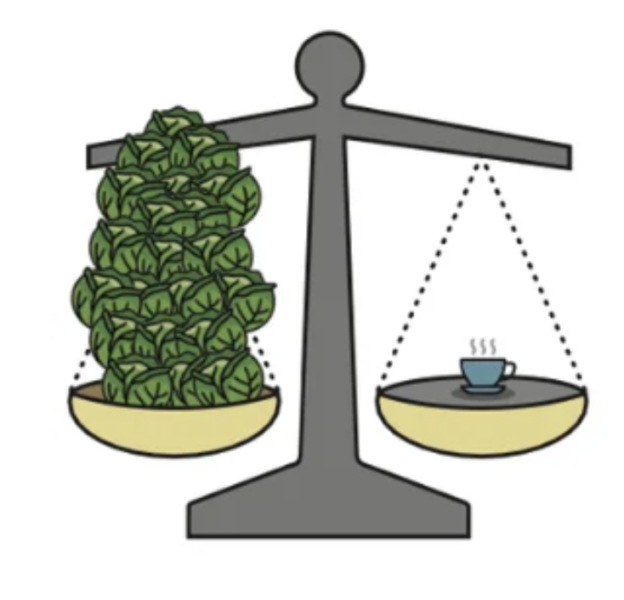
Caffeine was the most abundant drug we detected in human urine and in urine-fertilized crops. However, it was present in the lettuce in such tiny amounts that over a 70-year lifetime, a person who eats a salad every day containing 5.5-ounces of this lettuce would only ingest as much caffeine as is found in 1/20 of a single cup of coffee. Other drugs were present at even lower amounts.
There is also concern that antibiotics in urine-derived fertilizer could promote antibiotic-resistant bacteria in the soil. However, sanitizing urine–through pasteurization or six months of storage– kills these bacteria. When they die, evidence suggests the released DNA does not transfer resistance genes to soil microbes after application.
Soil Health
We have reason to believe that soil microbes may be helping to break down the pharmaceutical compounds, leading to the low levels found in urine-fertilized crops. This raises new questions about the impact of urine fertilization–including both pharmaceuticals and antibiotics–on soil health. Rich Earth is now conducting research to better understand how urine fertilization affects soil microbial communities through 5-year field trials in collaboration with Cornell University and Cornell Cooperative Extension.
Per- and polyfluoroalkyl substances (PFAS):
PFAS are a large group of synthetic chemicals widely used in consumer products since the 1950s; they are environmentally persistent pollutants with strong carbon-fluorine bonds that resist microbial breakdown, are commonly found in biosolids, and have been linked to negative effects on human health.
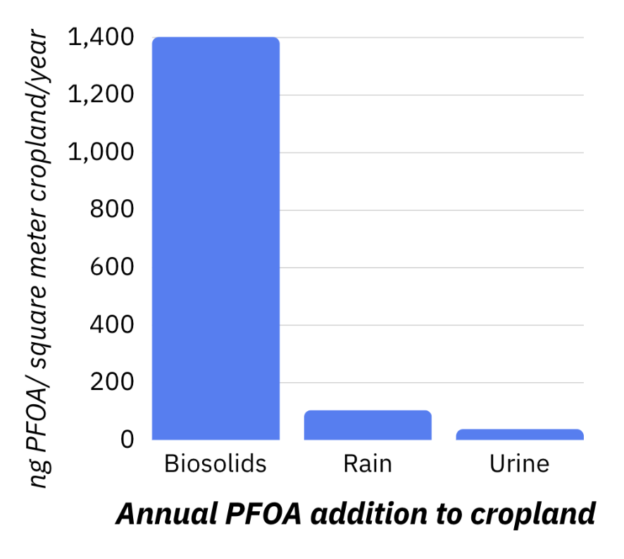
Some levels of PFAS may be present in urine, since they are commonly detected in human blood and leave the body slowly over time through urine and feces. However, urine contributes negligible amounts of PFAS to the soil when compared with rainwater (and much less than other common agricultural inputs such biosolids and irrigation water).
Research has shown that there are background levels of PFAS (most notably PFOA & PFOS) in virtually all soils. The amount of PFOA & PFOS added by a year’s worth of urine fertilization is less than 0.1% of the levels already present in soils with no history of contamination aside from rain and groundwater flows.
Purification
Even knowing the relative safety of urine-derived fertilizers, communities may wish to purify the urine prior to farm application. Granulated Activated Carbon (GAC) filters have been tested by researchers at the Rich Earth Institute and elsewhere for removal of micropollutants from urine. GAC filters are effective for removing residual pharmaceuticals and PFAS (especially long-chain PFAS) from urine. A GAC filter designed for community-scale urine processing is available through Rich Earth’s spin-off company Brightwater Tools.