Community Guide
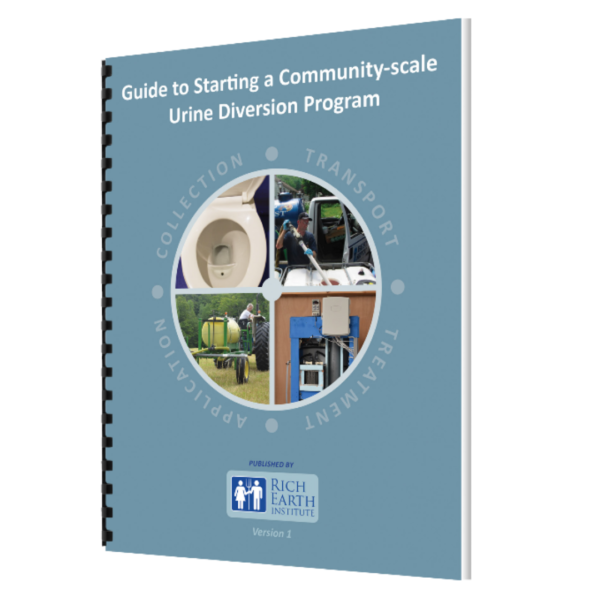
Click to view/download PDF of full guide or purchase a print copy.
Visit our companion guides to learn more about fertilizing with urine at the farm and garden scales.
Cultivating New Peecycling Hubs
After over a decade of recycling urine in Southern Vermont, the Rich Earth team is now helping other communities start programs of their own. With an ever-growing network of partners, we are working to galvanize peecycling infrastructure in new geographic hubs, protecting more watersheds and reaching new farm partners.
- Regional Organizing Sign-Up: Want to see a peecycling program near you? Fill out our Peecycling Community Interest Form. This form helps us connect folks together into localized nutrient networks, to inform future community organizing, funding, and permitting pathways.
- EcoSan Permitting Group: Mathew Lippincott and Rich Earth host this working group that meets quarterly to share regulatory strategies between US states, regions, and sectors– focused on systems for ecological sanitation. Join the group to view our shared resources, become a listserv member, and hear about upcoming discussions.
- Consulting: Ready to start the planning process for your community? Contact for more information about Rich Earth’s community urine recycling consultation services. For more information about building-scale urine diversion or compost toilet installations, we also recommend contacting Nutrient Networks and Point of Shift.
We’re particularly interested in exploring how we can support projects in one of these ‘early adopter’ contexts:
- Demonstration sites with leadership that is passionate about demonstrating urine recycling at their facility, strong community support and high public visibility (e.g. universities, festivals, or grassroots networks; sites with high volumes of source separated urine already being diverted such as waterless urinals at rest stops)
- Watersheds facing nutrient pollution (e.g. municipalities with mandates to reduce nutrient pollution from wastewater)
- Farms or gardens interested in experimenting with innovative methods for sustainable fertilizations (e.g. farms with foot traffic interested in hosting urine depots and processing on-site, home garden organizations interested in hosting Urine My Garden workshops)
- On-site sanitation and/or housing needs: (e.g. remote lodges where waste must regularly be hauled long distances; sites where wastewater is a limiting factor for housing development (e.g. septic leach field size limiting addition of an ADU; high sewer connection fees limiting new development)